A 1998 review of the effectiveness of psychedelic therapy for treating alcoholism concluded that due to methodological difficulties in the research prior to that time, it was not possible to state whether it was effective. Some research has found that psychedelics can help treat mental disorders such as obsessive-compulsive disorder, post-traumatic stress disorder, alcoholism, depression, and cluster headaches. More than half of psychiatrists in the 2023 study expressed intentions to incorporate psychedelic therapy into their practice if regulatory approval is granted. Despite broad prohibition, unofficial psychedelic research and therapeutic sessions continued nevertheless in the following decades. LSD and many other psychedelics were placed into the most restrictive "Schedule I" category by the United States Drug Enforcement Administration. Studies on medicinal applications of psychedelics ceased entirely in the United States when the Controlled Substances Act was passed in 1970.
Experiments On Canadians
- Others argue that the rapid commercialization and medicalization of psychedelics risks reproducing existing structural inequalities in mental health care.
- However, benzodiazepines have been used clinically to manage the adverse psychological effects of psychedelics, for instance in clinical studies and in the emergency department.
- However, some of these serotonin receptors may not be affected at typical brain concentrations of LSD.
- The popularization of LSD outside of the medical world was hastened when individuals such as author Ken Kesey participated in drug trials and liked what they saw.
- The onset is 0.3 to 3 hours and the duration is 4 to 10 hours.
Many of the persistent negative perceptions of psychological risks are unsupported by the currently available scientific evidence, with the majority of reported adverse effects not being observed in a regulated and/or medical context. In 1898, the English writer and intellectual Havelock Ellis reported a heightened perceptual sensitivity to "the more delicate phenomena of light and shade and color" for a prolonged period of time after his exposure to mescaline. While it is impossible to predict when a bad trip will occur, one's mood, surroundings, sleep, hydration, social setting, and other factors can be controlled (colloquially referred to as "set and setting") to minimize the risk of a bad trip.
Use And Effects
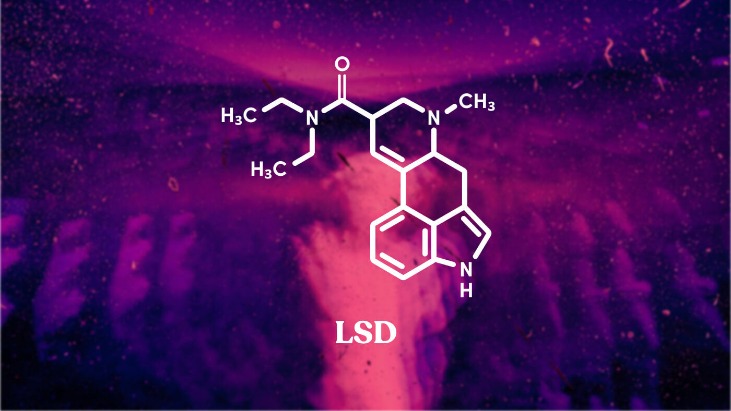
A 2010 study by David Nutt ranked LSD as significantly less harmful than alcohol, placing it near the bottom of a list assessing the harm of 20 drugs. The time to peak effects given orally is 2.2 to 2.8 hours on average, with a range of 1.3 to 6.5 hours. Noticeable effects can occur with doses of LSD as low as 20 μg, which is around 1/200th the mass of a grain of sand. This means that it produces its pharmacological effects at very small doses, with its dose range measured in micrograms (μg); that is, millionths of a gram. Lysergic acid diethylamide, commonly known as LSD (from German Lysergsäurediethylamid) and by the slang names acid and lucy, is a semisynthetic hallucinogenic drug derived from ergot, known for its powerful psychological effects and serotonergic activity.
- Risks do exist during an unsupervised psychedelic experience, however; Ira Byock wrote in 2018 in the Journal of Palliative Medicine that psilocybin is safe when administered to a properly screened patient and supervised by a qualified professional with appropriate set and setting.
- "When he married his third wife, Rosemary Woodruff, in 1967, the event was directed by Ted Markland of Bonanza. All the guests were on acid."
- Nowadays, with renewed interests in psychedelic compounds and their potential to treat conditions such as addiction, anxiety, and PTSD, LSD has again become the subject of academic interest.
- Most serotonergic psychedelics are not significantly dopaminergic, so LSD is unique in this respect.
- MKUltra used numerous methods to manipulate its subjects' mental states and brain functions, such as the covert administration of high doses of psychoactive drugs (especially LSD) and other chemicals without the subjects' consent.
The flyer lists an inaccurate description of the effects of LSD, some attribution (typically to a well-regarded hospital or a vaguely specified "adviser to the president"), and instructs parents to contact police if they come across the blue star tattoos. This legend frequently surfaces in American elementary and middle schools in the form of a flyer that has been photocopied through many generations, which is distributed to parents by concerned school officials. This book claimed "Musa sapientum Bananadine" was a mild psychoactive drug found in banana peels. The actual synthesis of LSD usually requires advanced knowledge and experience in organic chemistry and requires both expensive laboratory equipment and expensive, carefully controlled precursor chemicals.
There is evidence that psychedelics induce molecular and cellular adaptations related to neuroplasticity and that these could potentially underlie therapeutic benefits. It has long been known that psychedelics promote neurite growth and neuroplasticity and are potent psychoplastogens. Psychedelics, particularly psilocybin, show potential therapeutic benefits for depression, anxiety, and other mental disorders, with generally mild and transient adverse effects. Since then, research regarding the effectiveness of psychedelic therapy has been conducted under strict ethical guidelines, with fully informed consent and a pre-screening to avoid people with psychosis taking part. During the 1950s and 1960s, lack of informed consent in some scientific trials on psychedelics led to significant, long-lasting harm to some participants.
Prehistoric Use Of Psychedelic Substances
Artificial expression of the SERT in this population of neurons in animals resulted in a serotonin releasing agent that doesn't normally produce the HTR being able to do so. Serotonin is a hydrophilic molecule which cannot easily cross biological membranes without active transport, and the serotonin 5-HT2A receptor is usually expressed as a cell surface receptor that is readily accessible to extracellular serotonin. The PFC projects to many other cortical and subcortical brain areas, such as the locus coeruleus, nucleus accumbens, and amygdala, among others, and activation of the PFC by serotonergic psychedelics may thereby indirectly modulate these areas. Metabotropic glutamate mGlu2 receptors are primarily expressed as presynaptic autoreceptors and have inhibitory effects on glutamate release. In addition, biased agonists that activate β-arrestin2 signaling but not Gq signaling, such as ITI-1549, IHCH-7086, and 25N-N1-Nap, are non-hallucinogenic serotonin 5-HT2A receptor agonists. Full agonists and partial agonists above this threshold are psychedelic 5-HT2A receptor agonists, whereas partial agonists below this threshold, such as lisuride, 2-bromo-LSD, 6-fluoro-DET, 6-MeO-DMT, and Ariadne, are non-hallucinogenic 5-HT2A receptor agonists.
Psychedelic Experience
William Leonard Pickard (born October 21, 1945) is one of two people convicted in the largest lysergic acid diethylamide (LSD) manufacturing case in history. The 1998 movie Fear and Loathing in Las Vegas, adapted from Hunter S. Thompson's 1971 novel, portrays heavy psychedelic drug use and mentions Leary when the protagonist ponders the meaning of the acid wave of the 1960s. The website noted his daily intake of various illicit and legal chemical substances, with a predilection for nitrous oxide, LSD and other psychedelic drugs. Even before he began working on psychedelics, he was known as a theoretician rather than a data collector.
The last FDA approved study of LSD in patients ended in 1980, while a study in healthy volunteers was made in the late 1980s. Several figures, including Aldous Huxley, Timothy Leary, and Al Hubbard, had begun to advocate the consumption of LSD. Experiments included administering LSD to CIA employees, military personnel, doctors, other government agents, prostitutes, mentally ill patients, and members of the general public to study their reactions, usually without the subjects' knowledge. LSD's psychedelic properties were discovered 5 years later when Hofmann himself accidentally ingested an unknown quantity of the chemical.
Forms Of LSD-25
As of 2014, global treaties listing LSD and psilocybin as "Schedule I" controlled substances continues to inhibit a better understanding of these drugs. Despite objections from the scientific community, authorized research into therapeutic applications of psychedelic drugs had been discontinued worldwide by the 1980s. Throughout the 1960s, concerns raised about the proliferation of unauthorized use of psychedelic drugs by the general public (and, most notably, the counterculture) resulted in the imposition of increasingly severe restrictions on medical and psychiatric research conducted with psychedelic substances.
Clinical Features
They are intended to maintain the desirable muscle building effects of anabolic steroids while reducing undesirable androgenic actions (e.g., increased risk of prostate cancer). Selective androgen receptor modulators (SARMs) are a novel class of androgen receptor ligands. As a result of no real official naming for some of these compounds, as well as regional naming, this can all lead to potentially hazardous mix ups for users.
Although not present in humans, 5-HT5B receptors found in rodents also have a high affinity for LSD. Antipsychotics such as haloperidol are not recommended as they may have adverse effects. However, this instance has been mired in criticism and controversy due to miscalculation of LSD dose and concomitant post-LSD administration of promazine and pentobarbital. These findings suggest that elephants may be much more sensitive to LSD in overdose than humans and other species.
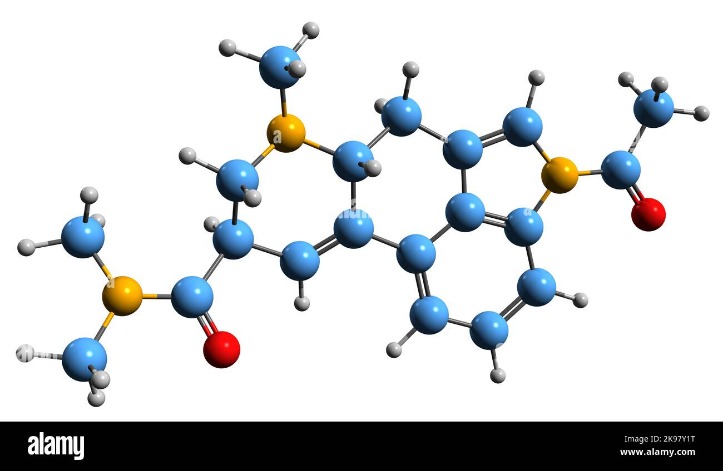
LSD itself acts as a non-selective agonist of serotonin and dopamine receptors, including of the serotonin 5-HT2A receptor, and this mediates its hallucinogenic effects. The drug acts as a readily converted prodrug of LSD and hence has very similar properties to those of LSD, including in terms of onset, duration, and subjective psychedelic effects. ALD-52, also known as 1-acetyl-LSD (1A-LSD) and falsely as "Orange Sunshine", is a psychedelic drug of the lysergamide family related to lysergic acid diethylamide (LSD). Completed in 2011, these represent the first study of the therapeutic effects of LSD on humans in 35 years; other studies had examined the drug's effects on consciousness and body.
Other Psychoactive Effects
Furthermore, the CIA operatives in charge of administering these experiments were told by superiors that the results of the experiments would be beneficial to the country. Senate investigators were told that the goals of these experiments were to study mind control and sexual behavior. Prostitutes on the CIA payroll were instructed to lure clients back to the safehouses, where they were surreptitiously plied with a wide range of substances, including LSD, and monitored behind one-way glass. Operation Midnight Climax and Project MKUltra were considered to be so secretive that few people, even in the highest government positions, knew about Sidney Gottlieb or his connection to the LSD used in the operation. Official results of these experiments were not released, and accounts from supervisors of the experiments give little insight to the findings.
More On Substance Abuse And Addiction
The liquid form is placed onto small paper squares known as “blotters,” which people can place on their tongues and/or swallow. Classified as a Schedule I drug under the Controlled Substances Act, LSD has a very high potential for abuse and no currently accepted medicinal use.1 The main users today are people in their late teens and early twenties.1 Although first synthesized in the 1930s and later marketed as a psychiatric cure-all, LSD really achieved widespread recognition through its association with the counterculture movement of the 1960s. LSD is a hallucinogenic drug that was used for both medicinal and recreational purposes throughout much of the 20th century.
Rick Doblin, an American drug researcher, described the work as "a proof of concept" that he hoped would "break these substances out of the mold of the counterculture and bring them back to the lab as part of a psychedelic renaissance." Throughout the 1950s, mainstream media reported on research into LSD and its growing use in psychiatry, and undergraduate psychology students taking LSD as part of their education described the effects of the drug. Between one and two hours later, Hofmann experienced slow and gradual changes in his perception.