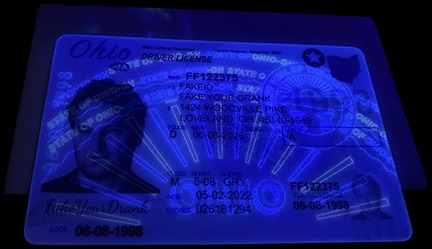
Authorities employ advanced data-mining software, network analytics, and artificial intelligence-driven algorithms to detect patterns indicative of illegal trade or fraudulent document production. Undercover agents create convincing fake profiles, interact with criminal vendors, and conduct controlled purchases. Purchasing and utilizing fake IDs or forged documents obtained from dark-web marketplaces carries substantial technical and legal risks. Despite the apparent ease, purchasers are continuously exposed to potential scams, fraud, interception by law enforcement, and severe legal consequences. Understanding the process involved in obtaining fake IDs and documents highlights both the complexity and the significant risks involved. In conclusion, the pathway fake documents take to arrive on dark web markets is complex and multifaceted, involving cybercrime, sophisticated forgery techniques, and thriving digital black markets.
The student decides whether to present a fake ID or not, and the bouncer decides whether to accept or reject it. Thinking of this from a behavioral perspective, a college student deciding whether to use a fake ID to gain access to a bar faces a decision influenced by peer pressure, potential social rewards, and the risk of punishment. In Texas, for instance, possession of a fake ID is a Class C misdemeanor, punishable by up to 180 days in jail and a $2,000 fine (Doug Murphy Law Firm, 2024). While fake IDs may seem like a harmless way to sneak into bars, the risks are real. The rise of online black markets has made acquiring fake IDs easier than ever, and cryptocurrencies like Bitcoin add an extra layer of anonymity to transactions, making the entire operation more difficult for authorities to track.
Realistic Replica ID Vs Poor Quality: Key Differences
AI-generated fakes often leave subtle traces, like unnatural facial expressions or unrealistic background elements, which can help trained systems flag these documents. This suggests that relying on barcode scanning or optical character recognition (OCR) alone is insufficient for detecting fraud. While the quality of AI-generated fake IDs is generally high, there are still telltale signs that can expose them. Of the third-party database checks run, DMV checks were able to catch 100% of the fake IDs. When combined with third-party database checks, we were able to catch 99.6% of the fraudulent IDs. We caught 84% of the AI-generated fake IDs with image and symbology analysis alone.
Whenever part of the fraud world pierces through the media noise, things get fascinatingly hectic. Also wanted to check if oldiornsidesfakes was a valid site for fake ID’s. Just wanted to know if there were any good/reliable fake ID vendors (specifically the 2018+ version of a California ID).
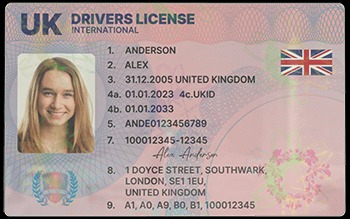
The Growing Threat Of AI Fake IDs
Research analyst firm Gartner says that one of the biggest risks to the digital verification market space is whether advancing AI attacks will undermine their integrity. This aligns with activity we observed from ProstoOtrisovka since 2021. The actor claimed the third version was developed over a year and a half and included random data for a document generation feature. ProstoOtrisovka claimed to have more than 300 document templates on file. We first reported on ProstoOtrisovka in February 2021. Based on the domain names’ similarity to the OnlyFake service 404 Media covered and the visual similarities of the panels, we assess these likely are the same service.
Get The MSP Security Playbook
We are proud to offer multiple software solutions capable of catching up to 95% of fake IDs. At IDScan.net, we believe in protecting businesses from the risk of inadvertently serving underage customers by giving them tools to catch the largest percentage of fake IDs in an affordable, scalable way. Because these deepfakes are not physically printed, and exist only as images, they are of highest concern for businesses that operate remote verification, and not something that most brick-and-mortar businesses need to worry about yet. In early 2024, news agencies created a panic around new, AI tools for generating images of fake IDs.
What Is Typosquatting? Detection & Protection Guide
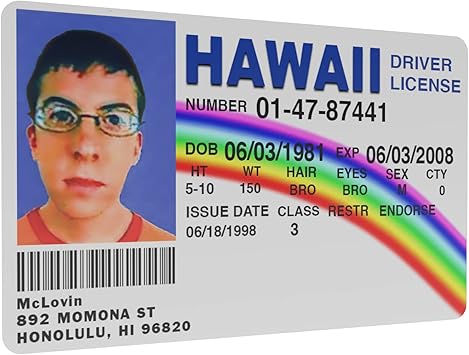
If any of these features are missing, the ID is likely fake. Real IDs have unique security elements that are hard to fake. With fake IDs getting more advanced, businesses and law enforcement must learn how to spot them. Criminals can more easily sell fake identification documents on the dark web without worrying about getting caught. The buying and selling of fake identification documents is mainly made possible by the dark web. Criminals sometimes use fake identification to escape from the police.
When citizens perceive that fraud is widespread or tolerated, social cohesion weakens, damaging overall community resilience and stability. Additionally, communities facing rampant document fraud often see declining public trust in institutions, businesses, and even interpersonal relationships. Victims of human trafficking or organized crime—enabled by fraudulent documents—experience profound and lasting trauma. Beyond abstract ethical considerations, document fraud frequently results in direct harm to individuals. In educational institutions, routine use of fake IDs among students can foster environments of leniency toward rule-breaking, indirectly promoting a culture where dishonesty becomes normalized.
Why Combatting Fake IDs Matters
- In 2026, fake ID statistics are not just numbers—they’re actionable insights driving real policy changes and prevention efforts across multiple sectors.
- Organizations must adopt advanced AI-driven security tools, implement rigorous identity verification practices, and continuously educate their workforce to recognize and respond to emerging threats.
- It illustrates that a profiling system for fraudulent identity documents, similar to one that operates in Europe, could be very successful if implemented over here.”
- They use fake identification to apply for credit cards or open bank accounts and steal personal data, including Social Security numbers.
- When fake ID users infiltrate your business, the ripples can become tsunamis.
The proliferation of sophisticated fake IDs undermines the very foundation of our identity verification systems. FBI reports indicate that 65% of major financial fraud cases in 2023 involved fake identification documents at some stage. These range from organized retail fraud rings to human trafficking operations and identity theft schemes. The consequences extend far beyond underage drinking, facilitating identity theft, financial fraud, illegal immigration, and potentially even terrorism.
Ultimately, it will be up to the service provider using an identity verification service to determine what is the lowest amount of confidence that can be considered acceptable in accepting an online customer application. While the OnlyFake service is not likely leveraging true deepfake technology, we still increasingly are seeing KYC verification bypass service offerings claiming to leverage generative AI. In August 2023 and November 2023, we reported on the GENERATOR 3.0, which is a component of the actor ProstoOtrisovka’s Passport Cloud aka Cloud Passport automated document forgery service, which was available via Telegram channels and at the onlyfakedotnet and onlyfakedotorg domains. What follows is a summary of our research with an assessment of the risks to organizations using online identity verification. One example would be government administered digital ID programs.
In order to make a case for natural-born citizenship, a new identity seeker needs to be able to show that they were born in this country and that their name/birth date/location of birth matches their new identity. Each country has different specific forms of identification, and all countries use a driver’s license as a general ID card — so both specific and general IDs are essential documents for new identity seekers. A passport will only get someone into the country, but in order to be considered a fully functioning member of society, a new identity seeker will need some kind of documentation that they are a registered resident (or citizen). There were also many passports labeled “fake” and “counterfeit” — these were not expected to be genuine and, as such, demanded considerably less money (as low as US$10). Others are 100% fake, and if caught, the user will be subject to criminal prosecution.
Fake ID Statistics 2025: A Wake-Up Call For Age-Restricted Sellers
IDScan.net offers the leading AI-powered identity verification platform focusing on age validation and fraud reduction for compliance in both digital and physical environments. To mitigate the risk of ever-improving AI fraud, businesses must have AI-ready methods of their own, by way of best-in-class identity solutions. Our study revealed that the quality of fake IDs, analyzed through various physical and software-based fraud prevention tools, varied state by state. Additionally, use of AI-generated fake ID images often comes with specific digital behaviors which can be monitored and flagged in the digital identity verification process. To deter potential AI-generated fake ID buyers from purchasing, the identity verification industry needs to demonstrate that our solutions are advanced enough to spot them, even as they increase in quality.
"A quality fake ID is often the first domino in a sequence of increasingly serious crimes," explained FBI Special Agent Marcus Jackson. Document forgery networks often start with fake IDs before expanding into passports, birth certificates, and Social Security cards. Human trafficking operations use fake IDs to transport victims across state lines and international borders.
New Security Features
In addition to government-led initiatives, private sector engagement has emerged as a vital component in the fight against fake IDs. Our investigation found growing consensus among law enforcement agencies about the need for coordinated approaches to fake ID proliferation. "A fake ID might look perfect, but it can't replicate your fingerprint or retinal pattern in real-time." By creating immutable, distributed records of identity verification, systems could confirm an individual's age or identity status without revealing unnecessary personal details. The future of identity security lies in dynamic rather than static verification. Our digital investigation revealed an elaborate ecosystem of fake ID promotion and review.
Businesses are advised to use identity management software and multi-layered verification systems for stronger protection. Compounding this vulnerability is the fact over three quarter (76%) of fraud now occurs after the onboarding stage, using methods such as device fingerprint spoofing, credential stuffing, and so-called “money muling.” The most dramatic spike was recorded in Europe, where synthetic ID fraud surged by 378%, followed by North America (311%) and the MENA region (258%). New data from Sumsub has claimed the creation of fake documents using AI grew by 195% worldwide between Q and Q1 2025. AI is now creating better fake IDs than real ones, experts warn
By creating a fraudulent British passport through OnlyFake, Joseph Cox—or as his fake ID said, “David Creeks”—managed to verify his false identity when creating an account with the cryptocurrency market OKX. We use the latest technology to ensure every security detail embedded in a real ID card is recreated in our fake ids. Collaboration with cybercriminals enables synthetic identity fraud, phishing, and deepfake-enhanced undetectable documents. By investing in identity solutions that leverage AI-driven fraud detection, businesses can protect themselves from costly fraud schemes while ensuring a seamless experience for legitimate customers.At Experian, we combine cutting-edge fraud prevention, KYC and authentication solutions to help businesses detect and prevent AI-generated fake ID and synthetic ID fraud before they cause damage. Some industries face a higher risk than others when it comes to fake IDs and identity fraud. From the traditional college student looking for a shortcut to adulthood, to the sophisticated criminal networks orchestrating fraud and identity theft, fake IDs have infiltrated almost every layer of society.
With enhanced security features and a strong focus on financial fraud, STYX has become a go-to marketplace for those looking to engage in cybercrime on a more technical level The market is also known for its listings related to financial fraud, such as phishing tools and stolen credit card information. It offers a wide range of illicit goods, including illegal drugs, counterfeit items, fake IDs, passports, and software keys. Others were casual users—people buying fake IDs, stolen credit card numbers, or drugs.
Tools And Practices For Individuals

In addition to the legal risks, using a fake ID can also compromise your personal safety. Using a fake ID can have serious consequences, including fines, jail time, and a criminal record. It is essential to exercise caution when purchasing a fake ID online, as many vendors are scammers who will take your money and provide you with nothing in return. The quality of fake IDs sold on the dark web can vary greatly, with some being indistinguishable from real IDs and others being obvious fakes.