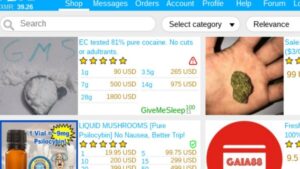
This deep dive examines the marketplace’s history, technical underpinnings, the man behind the alias, and how investigators brought down a darknet kingpin. By day, he worked as a diplomatic tech expert training police in cybercrime; by night, he was “Pharaoh,” the secretive mastermind of Incognito Market – one of the world’s largest dark web drug marketplaces. As a new market, it has not yet established itself in the community, although it remains a reliable alternative when larger markets decline. Overall, Incognito is a somewhat clunky but effective darknet marketplace filled with digital goods and scam-related products.
The darknet community, on its side, has grown warier as well; the revelation of Lin’s day job likely rattled other market admins. In response, agencies might vet their external trainers and consultants more carefully, and perhaps look closer at young “prodigies” who have one foot in blockchain analytics and another in shady online forums. Lin was clearly comfortable straddling both, and we see echoes of this in other cases – for example, experts who advise on cybersecurity while dabbling in black-hat activities on the side. On the other hand, smaller markets might individually have fewer resources to defend against attacks or infiltration. The fact that Pharaoh chose to exit scam his own users is unfortunately not an outlier; exit scams have been a recurring trend (Empire in 2020, Evolution in 2015, etc.). Incognito’s demise also highlighted the persistent issue of trust and instability in the darknet market ecosystem.
These markets function as comprehensive digital storefronts, offering a wide array of products with detailed descriptions and user review systems that ensure quality and vendor accountability. Platforms like the Nexus darknet market exemplify this progress with their refined user interfaces, which streamline the process of browsing and purchasing items. Additionally, the market staff imposed a full ban on all opiates and opioids (hydrocodone, oxycodone, heroin, etc), along with all other narcotics that fall under the deliriant class, not just fentenyl like many other darknet markets.
Most Popular Sites On The Darknet
In addition, all data is encrypted with PGP keys, ensuring that your data never leaves the Incognito darknet. He could also receive a maximum penalty of life in prison for narcotics conspiracy, a maximum penalty of 20 years in prison for money laundering, and a maximum penalty of five years in prison for conspiracy to sell adulterated and misbranded medication. If convicted, Lin faces a mandatory minimum penalty of life in prison for engaging in a continuing criminal enterprise. In the 41 months that Incognito Market was open, it facilitated the sale of more than $100 million of narcotics. The site allowed buyers to search through thousands of listings for narcotics of their choice.
Immigration Enforcement Frequently Asked Questions
In a brazen move that echoes tactics employed by ransomware syndicates, the darknet narcotics marketplace Incognito Market has initiated an extortion campaign against its own users. “This arrest underscores the dedicated, ongoing efforts of law enforcement to identify and dismantle illicit drug networks operating from every shadowy recess of the marketplace,” said Commissioner Edward A. Caban of the New York Police Department (NYPD). “This arrest underscores the dedicated, ongoing efforts of law enforcement to identify and dismantle illicit drug networks operating from every shadowy recess of the marketplace,” said New York Police Department Commissioner Edward A. Caban.
Instructions For Going To Sites
- U.S. agencies like the FBI, DEA, IRS-CI, and HSI worked alongside Europol, the U.K.’s NCA, and law enforcement from over a dozen countries.
- TRM has identified structured withdrawals from the market to personal wallets and then to services with less stringent KYC.
- At the exchange, Lin had again used his real identity to register the account, so when law enforcement subpoenaed the exchange, they obtained his passport and personal details, email, and phone number on file.
- Buyers are reminded that even “trusted” markets can vanish overnight, taking escrow funds with them or – worse – exposing their data.
- This desperate move sent vendors scrambling to salvage what they could; many abandoned Incognito immediately, fleeing to alternative markets even as they feared their personal data might be exposed.
Its success also coincided with a broader rebound of darknet commerce; by 2023, dark web markets collectively grossed about $1.7 billion in cryptocurrency revenue, recovering from a slump after the 2022 takedown of the infamous Hydra market. We also explore the legal fallout and what Incognito’s downfall signals for the future of online black markets. Until that moment, Lin led a double life that astonished both law enforcement and the darknet community.
US Treasury Sanctions Iranian National For Operating Darknet Market Nemesis
The DOJ noted that the marketplace had closed in March this year, coinciding with a previously reported exit scam that allegedly stole millions of dollars worth of customer’s BTC and XMR. A 23-year-old man has been arrested in New York and charged with owning, running and profiting from a $100-million dark web narcotics marketplace after authorities claimed to have tracked crypto transfers that uncovered his real identity. The FBI claimed it found Incognito Market’s alleged owner, Rui-Siang Lin, by tracking crypto from the dark web drug market to a crypto exchange account allegedly in his name. U.S. agencies like the FBI, DEA, IRS-CI, and HSI worked alongside Europol, the U.K.’s NCA, and law enforcement from over a dozen countries. With the right partnerships, tools, and pressure at key chokepoints—such as when crypto is converted into fiat—law enforcement can still follow the money, identify key actors, and dismantle networks once thought untouchable.
"Incognito Market" Founder Arrested At JFK Airport, Accused Of Selling $100 Million Of Illegal Drugs On The Dark Web
But it raises the troubling possibility that a former dark-web kingpin—one who was still extorting his own users—was perhaps playing both sides of the crypto tracing game, says Elliptic's Tom Robinson. His last X post shows a Chainalysis diagram of money flows between dark-web markets and cryptocurrency exchanges. “Stay posted and fuck LE," Pharoah wrote, using the abbreviation LE to mean “law enforcement.” Antinalysis eventually returned, however, and pivoted last year to acting instead as a service for swapping bitcoin for monero and vice versa.
The Rise And Fall Of Kingdom Market, A Darknet Empire
In an extraordinary twist, Lin had previously worked for Taiwan’s Ministry of Foreign Affairs, where he trained law enforcement officials on the very blockchain analytics techniques used to take down platforms like his own. There’s also a legislative trend of sanctioning known darknet markets; for example, Hydra’s crypto wallets were sanctioned by the U.S. We can expect more proactive targeting of darknet markets by multi-country coalitions (similar to how Europe’s Europol and the FBI have partnered in the past). One poignant trend is the increasing involvement of international law enforcement and harsher legal consequences, as evidenced by Incognito’s case.
Key Features Of Incognito Darknet Markets
Bitcoin and other privacy-focused coins are the standard for anonymous payments, effectively separating financial transactions from real-world identities. Access to these services is maintained through a system of onion links and mirrors. He threatened to reveal all the transaction details on Incognito, including the names of buyers and sellers, which could identify people involved in illegal orders. The payments ranged from $100 to $20,000, depending on how many transactions each person had handled. It began by freezing their cryptocurrency funds, so they couldn’t withdraw their money.
Charges, Court Proceedings, And Ripple Effects
The use of extraterritorial law enforcement tactics (like grabbing Lin during a layover) further shows that being outside the U.S. is not a guaranteed shield, especially if one travels internationally. As TRM Labs noted, Incognito’s former vendors are nervous about “Lin’s possible cooperation with the government” now that he’s in custody. It’s not publicly known if Lin is cooperating (providing information on other criminals) as part of his plea, but the darknet vendor community is certainly anxious. In addition to the CCE charge (under U.S. drug laws), Lin faced counts of conspiracy to distribute narcotics, conspiracy to commit money laundering, and conspiracy to sell adulterated and misbranded drugs. Lin’s case is a study in the classic cat-and-mouse game – with a twist that the cat (law enforcement) had some very powerful new mice-hunting tools.
For someone so young, Lin handled high-stakes operations with remarkable skill – Incognito’s growth attests to that. Lin managed to keep his darknet identity separate from his day job for years, even as he moved from Taiwan to the Caribbean for work. It’s notable that around the same time, Lin in his real-life persona was burnishing his credentials in cryptocurrency tracing. When cybersecurity journalist Brian Krebs discovered and wrote about the service in August 2021, he dubbed it an “anti-anti-money laundering service for crooks,” and he traced its data source to a legitimate blockchain tracing API (which promptly cut off access). This move positioned Pharaoh as something of a champion of privacy in the eyes of darknet denizens. According to prosecutors, Lin “had ultimate decision-making authority over every aspect of the multimillion-dollar operation”.
Pharaoh threatened to release the identities and private messages of all Incognito vendors and buyers to law enforcement unless he was paid off – essentially holding his own user base hostage. The extortion message includes a “Payment Status” page that lists the darknet market’s top vendors by their handles, saying at the top that “you can see which vendors care about their customers below.” The names in green supposedly correspond to users who have already opted to pay. In the summer of 2021, during Incognito Market's relatively quiet first year, Lin's alleged alter ego, Pharoah, launched a service called Antinalysis, a website designed to analyze blockchains and let users check—for a fee—whether their cryptocurrency could be connected to criminal transactions.