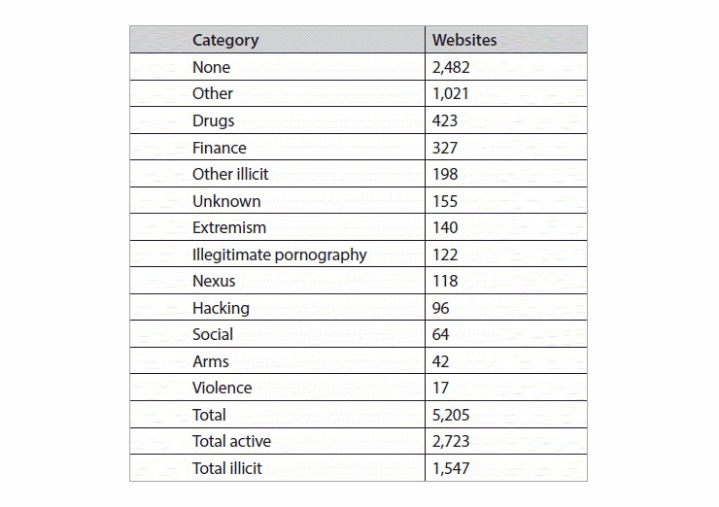
While there are legitimate uses, much of the content hosted there involves illegal activity, including drug trafficking, illicit imagery, and the sale of stolen data. For example, in 2016, investigative news outlet ProPublica launched a hidden version of its website on the dark web to provide a secure and anonymous way for readers to access its content. Although Tor and similar tools offer another layer of protection, the dark web’s lack of regulation and hotbed of illegal activity can expose users to scams, malware, and other hidden threats.
On the dark web, neither users nor web administrators reveal themselves to each other, including their identity or their location. With that said, legitimate websites also exist on the dark web. Risks of accessing dark web and deep webBenefits of using the dark web? But the Web doesn't include only websites like Facebook, Google, Geeksforgeeks, etc.
What Is The Difference Between Deep Web, Darknet, And Dark Web?
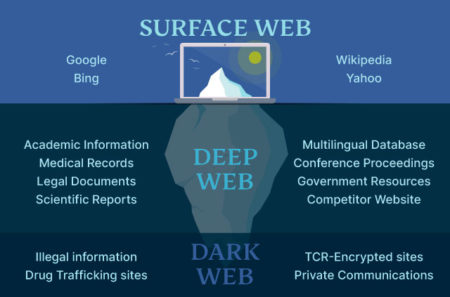
The deep web contains websites that are not indexed by search engines. The deep web is a layer of the internet that’s not indexed by search engines and requires further permissions to access, like a paywalled academic resource or an employee-only corporate website. It mainly hosts hidden websites that can’t be found on search engines and typical browsers can’t open.
Staying Safe Online
According to experts, the deep web takes up more than 90% of the internet, but none of it is indexed on search engines. But the dark web’s security and anonymity can also be used for legal activities, such as sending private messages. Basically, the dark web is the anonymous part of the Internet, where identities are completely hidden, and access to websites is encrypted.
Deep Web Vs Dark Web: Risks
The surface web is accessible by most browsers and search engines. Most users don’t really need to use the dark net, nor is it possible to accidentally stumble upon it as it’s only accessible through Tor or another special browser. As mentioned, it’s rife with online criminals who are on the lookout for vulnerable users online. However, not all websites are secure on the deep web, which can leave users vulnerable to attacks. The deep web is mainly safe, especially if it’s trustable websites with firewalls and encryption.
Lately, hackers have been in the news due to attempts to sell stolen data on the dark web. Unfortunately, the dark web received a lot of media attention around 2014–15 when the founder of online black market Silk Road was convicted of various crimes, including several attempted murders-for-hire. Journalists use the dark web to help protect the anonymity of their sources, and others use the dark web simply because they believe strongly in their right to privacy. The dark web isn’t all illicit deals and seedy undertakings; it’s used for an array of purposes. The deep web is a general, catch-all term that includes not only the dark web, but also includes a lot of “mundane content,” according to Andy Greenberg at Wired. You cannot access either from Google or Bing.
MORE ON SECURITY
- This type of scam is incredibly prevalent on the Dark Web, making it extremely easy for criminals to defraud people.
- These are websites and servers that have been deliberately hidden.
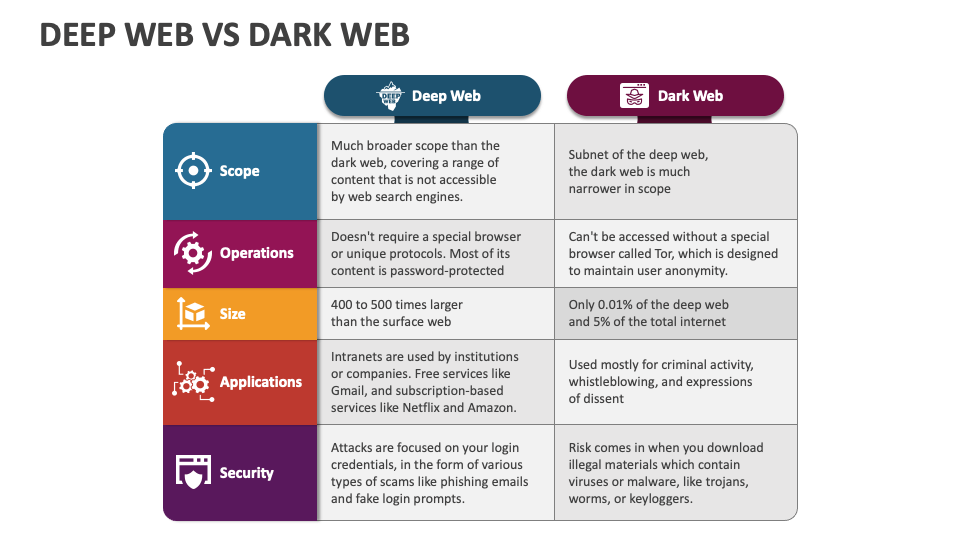
- While the Dark Web is always part of the Deep Web, the Deep Web itself is predominantly legitimate, everyday private content.
- The majority of deep websites don’t host illegal content while most dark sites host criminal activities.
- The dark web may also be put to good use by whistleblowers, who can leak classified information on the dark web using websites such as Wikileaks.
You can also stumble upon politically radical or extremist forums and other disturbing content. As you venture deeper, you might start to come across borderline illicit content like pirated music and movies. Your college website account, online library, or the project management app your employer uses are all part of the deep web. Although Tor encrypts your connection, its encryption standards are pretty low and a third-party could easily track your internet activity. It is a special browsing tool that does not track your browsing history and helps you surf the dark web.
Deep Web Vs Dark Web: Key Differences
Here’s the difference between the surface web, the deep web, and the dark web, and what you need to know to help protect yourself online. The Deep Web, which is mostly harmless, suffers by association, since people assume that one is the same as the other. The Dark Web has a well-deserved reputation for being dangerous and full of nasty people.
The Deep Web consists of countless legitimate applications, such as research or retrieval of personal medical records, or corporate management of data. It comprises many legitimate resources including academic databases, medical records, and private corporate networks. Understanding the differences between the deep web vs dark web is crucial for the safe and responsible use of the internet. Below, we delve into the differences between the deep web and dark web, covering how to access them, their purposes, legal aspects, typical users, risks, browser options, use cases, and notable examples. The internet has levels that vary according to their purpose and the content. Hence, while the face of the internet remains the surface web, the deep and dark web are the hidden layers of the internet that require caution and understanding to traverse.
Understanding The 3 Layers Of The Internet
One of the best ways to maintain privacy in your communications is by using encrypted email services. But a single set is generally enough if it’s just about one or a few “informational” visits. A discrete online identity, which has nothing to do with your present one. It’s a rare protocol, and people don’t use it normally.
Search Darknet
Unlike the public surface web, which is open to everyone, the Deep Web comprises information hidden from public access. Knowing the difference between the Deep Web and the Dark Web is vital for online security and privacy. Accessing some websites can be incriminating if authorities manage to trace it back to you even without any purchase.

Are There Legitimate Uses For The Dark Web?
- And contrary to what you may think, the dark web offers several sites that aren’t connected with illegal activity.
- Xcitium provides advanced cybersecurity solutions, including Zero Trust architecture, to ensure the safety and integrity of your digital assets, whether you’re navigating the surface web, deep web, or protecting against dark web threats.
- This section of the internet is home to illegal drugs, illegal firearms sales and child pornography.
- Many VPNs are sluggish, so they will not be suitable for data-intensive tasks.
- In fact, these sites make up around 96% of the internet and some even provide cybersecurity measures to improve your online privacy.
- The Dark Web is primarily used to conceal illegal activities.
Good security practices and a sense of discretion can significantly reduce these dangers. Users can inadvertently visit malicious sites or fall victim to scams if they’re not cautious. Given the mystique surrounding the Deep Web and Dark Web, it’s easy to see how misconceptions and exaggerated claims emerge. While the technology that underpins it has valid applications for privacy and anonymity, it also draws criminal elements who exploit that same anonymity.
HEIMDAL® ENDPOINT DETECTION AND RESPONSE SOFTWARE
For instance, journalists may use it to safely and anonymously share stories, especially in places with high censorship. For instance, stolen data like usernames and passwords or credit card numbers end up on the dark net. That said, flaws in security in Tor or other browsers can sometimes lead to the user being tracked. Dark web browsers like Tor encrypt traffic and route it through randomized servers or nodes to make the website's users and host untraceable.
For example, you might tell your closest friend about a problem in your personal life, but you would not tell the clerk at your grocery store. The person or group who has posted a webpage on the open web doesn’t care who has access to it or what can be done with it. To help remember the differences between the surface web, the deep web, and the dark web, think of the differences between “public,” “private,” and “secret.” The dark web, on the other hand, makes up a tiny fraction of the internet as a whole. When you log in to your favorite video streaming site or check your bank account balance online, that’s the deep web at work. The “deep web” includes everything on the internet that is password-protected, paywalled, or even just protected from crawling by a site’s robots.txt file.